Residential Mold Remediation in Cocoa, FL
We trace the moisture feeding the growth, contain the affected area, and remove the contamination from your living space.
- Licensed & Insured
- Same-Day Service
- Upfront Pricing
- Local Cocoa Team
We trace the moisture feeding the growth, contain the affected area, and remove the contamination from your living space.
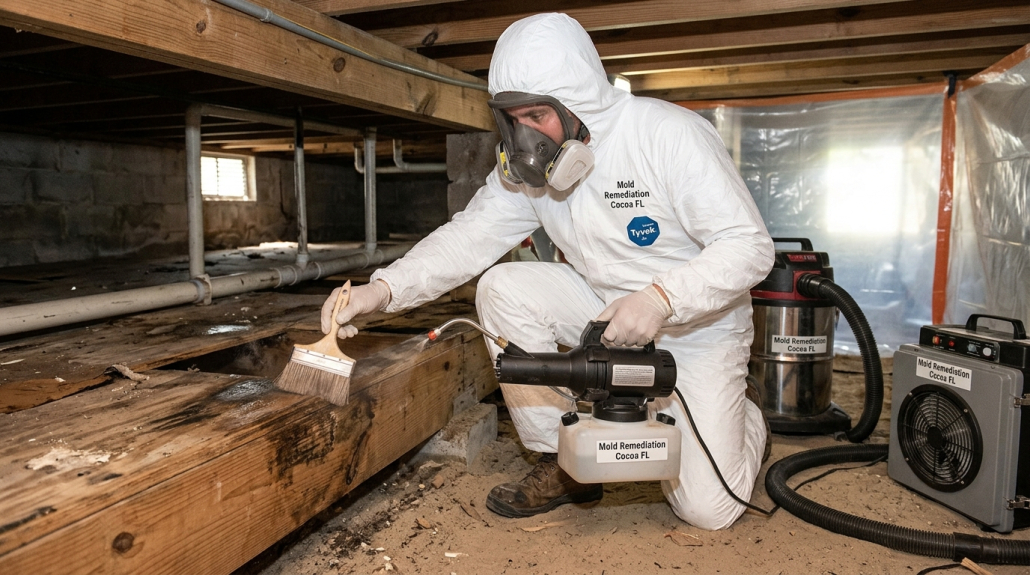
Residential mold remediation is the process of finding the moisture that is feeding mold, sealing off the affected area, removing contaminated materials and cleaning the space. It differs from wiping down a surface because it fixes the cause and deals with growth inside materials like drywall, insulation and wood.
Residential mold remediation in Cocoa, FL is the work of finding why mold is growing in a house, containing the affected area, removing the growth and cleaning the space. You need it when you see or smell growth, or when a leak or water event leaves building materials damp. It goes beyond a surface wipe-down because it deals with the water source and the porous materials, such as drywall, insulation and wood framing, where growth takes hold.
Local conditions make this a common problem. Local climate data shows average relative humidity of about 76% and about 54 inches of precipitation a year, and U.S. Census data shows about 55% of homes were built before 1980, with a median build year of 1975. Older roofs, plumbing and ductwork have had more years to develop leaks, so we inspect those likely entry points first and plan removal around what your home is actually made of.
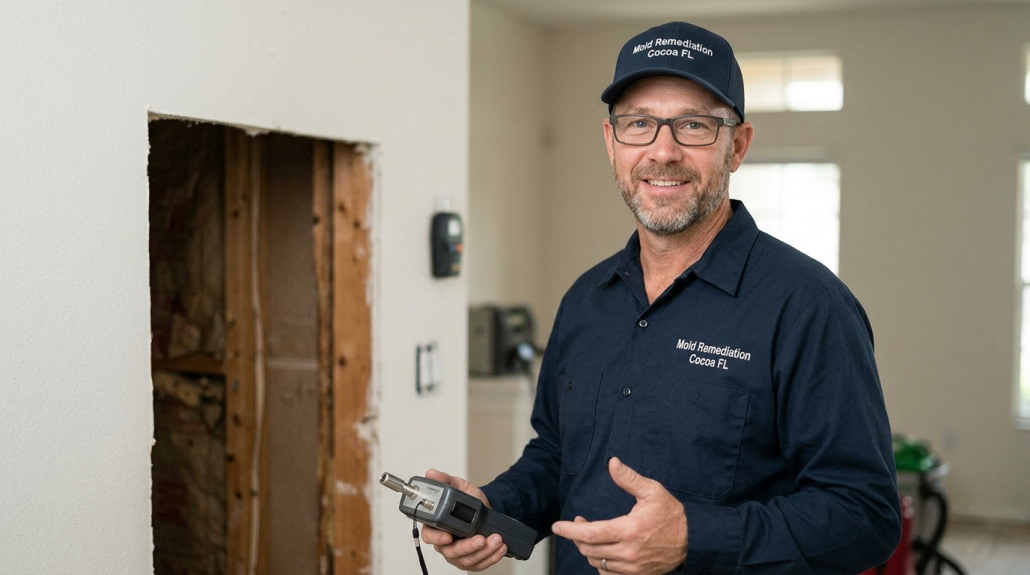
We inspect likely entry points such as roof leaks, plumbing, window seals and HVAC condensation. Pinpointing the water source is what keeps cleanup from being temporary.
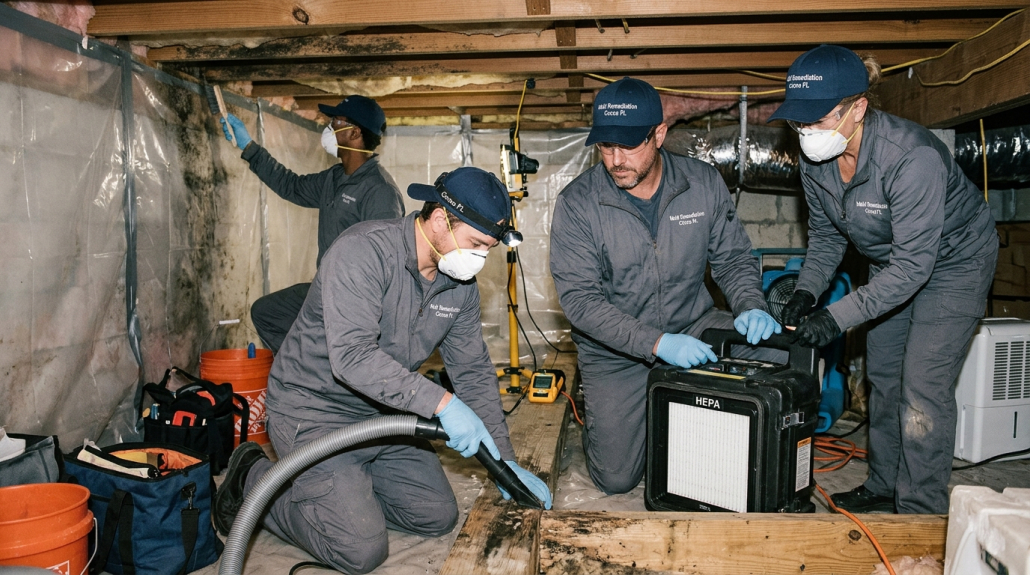
Affected areas are sealed off with barriers so disturbed spores do not travel into clean rooms. Porous materials that cannot be cleaned, such as soaked drywall or insulation, are cut out and bagged for disposal.
Framing and other hard materials that remain are cleaned, and the area is dried before anything is rebuilt. We explain what repair or finishing work is still needed once the space is clear.
Every job starts with a walk-through of the affected rooms and a plain explanation of what we find. We serve homeowners in Cocoa, FL, and we tie the scope to what the inspection shows rather than a fixed package.
You will know which areas are being opened, what is being removed and what will need rebuilding afterward. Because your home’s age and materials affect the plan, we adjust our methods for drywall, wood, insulation and other surfaces as the work progresses.
Straight answers before you schedule any work.
What does residential mold remediation include?
It includes finding the moisture source, sealing off the affected area, removing contaminated materials, cleaning remaining surfaces and drying the space. The exact scope depends on how far the growth has spread and which materials it reached.
How do I know if I need mold remediation?
Visible growth, a persistent musty smell, recurring dark spots or damp drywall after a leak are the main signs. Hidden growth behind walls, under flooring or around HVAC components can show up as odor or staining before anything is clearly visible.
What affects the cost of mold remediation?
Cost depends mainly on the size of the affected area, which materials are involved, how hard the area is to reach and how much removal and rebuilding is needed. We look at the home first so the scope matches the actual problem.
How long does mold cleanup take?
It depends on the size of the affected area, how much material must be removed and how long drying takes. A small contained area moves much faster than growth that has spread through wall cavities.
Can I clean mold with bleach myself?
Usually only for small spots on hard, non-porous surfaces. Bleach does not reach growth inside drywall or wood, and it does nothing about the moisture that caused the problem, so larger or recurring areas need proper removal.
Why does mold come back after cleanup?
Usually because the moisture source was never fixed or the area was not fully dried. With local humidity averaging about 76%, damp materials can support new growth again.
What should I do before help arrives?
Stop the water source if it is safe to do so and leave the growth undisturbed. Avoid scraping, sanding or blowing air across it, because that can spread spores into other rooms.
What should I ask before hiring a remediation company?
Ask how they find the moisture source, how they contain the work area and what gets removed versus cleaned. Request the scope in writing so you can compare it with the work that is actually done.
Tell us what you are seeing, and we will explain how residential remediation in Cocoa, FL would work for your property.