Local Mold Remediation in Cocoa Beach, FL
We contain, clean and remove mold from affected areas, then address the moisture behind it so the problem is less likely to return.
- Licensed & Insured
- Same-Day Service
- Upfront Pricing
- Local Cocoa Team
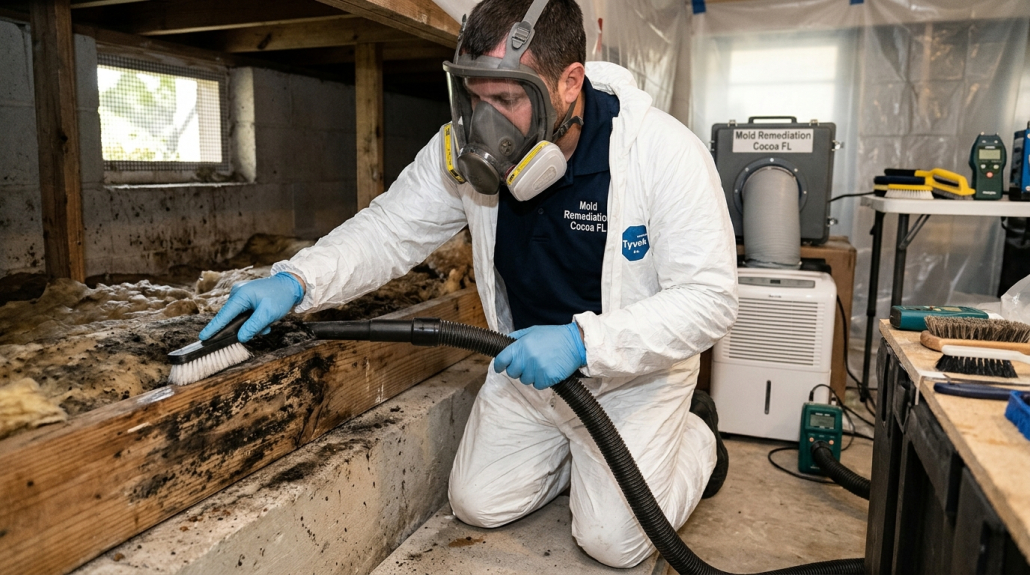

We contain, clean and remove mold from affected areas, then address the moisture behind it so the problem is less likely to return.
Mold remediation is the process of containing, removing and cleaning mold growth, then fixing the moisture that caused it. A homeowner needs it when mold is visible, a musty smell lingers or water damage has stayed wet. Cleaning the surface alone usually fails because the source of moisture remains.
Mold remediation in Cocoa Beach, FL is the process of containing, removing and cleaning up mold growth, and you need it when mold is visible, a musty smell lingers or water damage has stayed damp. The work targets the contaminated materials and the moisture feeding them, not just the stain you can see.
Humidity is the backdrop here. Local climate data shows about 76% average relative humidity and about 54 inches of precipitation a year, so building materials stay damp easily after a leak or storm. U.S. Census data also shows about 55% of homes in the local market were built before 1980, and older roofs, plumbing and ductwork give moisture more ways in. We inspect first, map where the growth and moisture are, then set up containment before any cleanup begins.
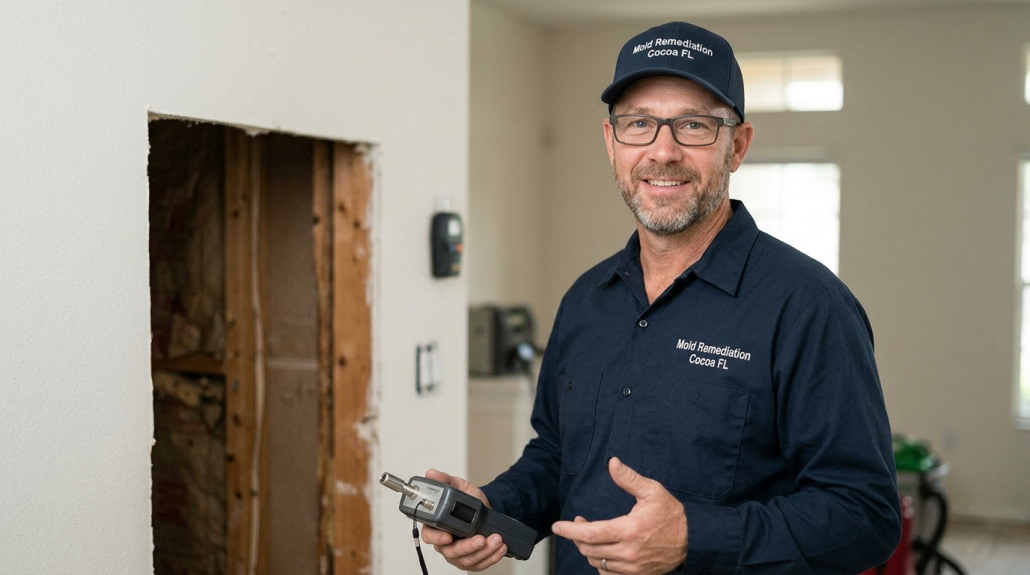
We seal off the affected area and control airflow so spores are not pushed into clean rooms. This keeps the cleanup from spreading the problem through the rest of the home.
Porous materials such as soaked drywall or insulation that cannot be cleaned are cut out and bagged, while solid surfaces are cleaned. Where the growth sits decides which approach applies.
Growth returns when the water stays, so we trace the leak, condensation or humidity issue behind it. We point out what needs repair and let materials dry before the area is closed back up.
Each job starts with a look at where the moisture came from and how far the growth has spread, because that decides the scope. We explain what we find in plain terms before work begins, so you know which rooms and materials are involved.
We serve homeowners in Cocoa Beach, FL and the surrounding area, and we plan each job around the home's materials, layout and moisture history. Before help arrives, keep the affected room closed, avoid running fans through it and do not disturb visible growth.
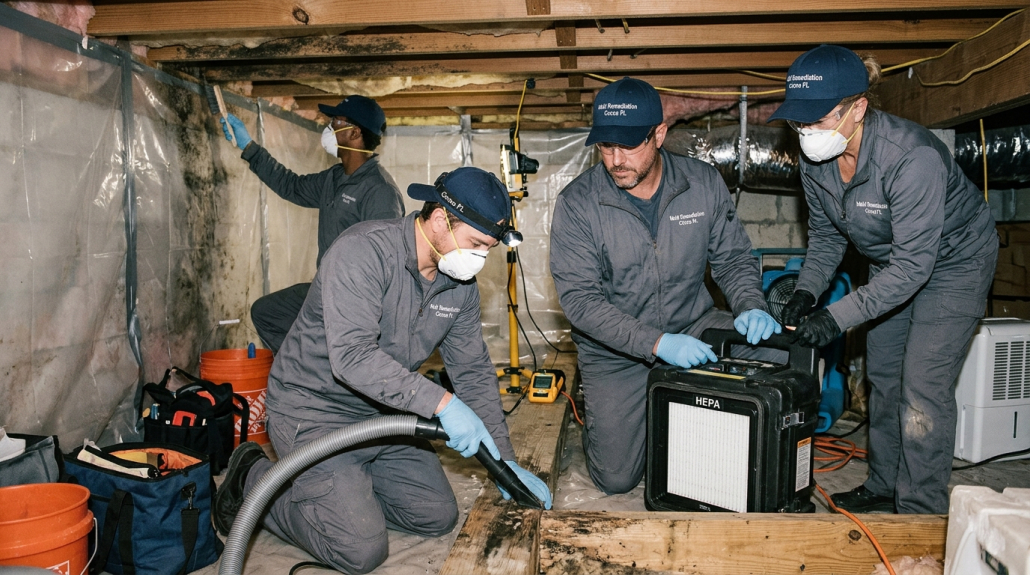
Straight answers on scope, timing and what to do first.
What does mold remediation include?
It includes inspecting the affected area, containing it, removing materials that cannot be cleaned, cleaning surfaces that can be saved and addressing the moisture source. The last step is confirming the area is dry before it is closed up.
What affects the cost of mold remediation?
Cost depends mainly on how much area is affected, which materials are involved and how hard the area is to reach. Containment needs, drywall or insulation replacement and moisture repairs also change the scope, so a firm figure only comes after the problem has been seen.
How long does mold cleanup usually take?
It depends on the size of the affected area and how much material has to come out. A small contained patch takes far less time than widespread or hidden growth, and drying time after cleanup is part of the schedule.
What are the signs of mold in a house?
Common signs are a musty smell, visible spotting on walls or ceilings, peeling paint, warped drywall and recurring condensation. In humid Florida homes, a smell with no visible source often points to growth behind a wall or above a ceiling.
Is it safe to stay home during cleanup?
That depends on where the growth is and who lives in the home. Containment keeps the work zone sealed from the rest of the house, but people with asthma, allergies or weakened immune systems may prefer to stay elsewhere during the work.
Can I clean mold myself with bleach?
For a small patch on a hard, non-porous surface, household cleaning may handle it. Bleach does not reach growth inside drywall or wood, and scrubbing larger areas can spread spores, so anything extensive or tied to a leak should be assessed first.
Why does mold keep coming back?
It returns when the moisture source is still there, such as a slow leak, poor ventilation or wet insulation. Cleaning the surface without fixing the cause only resets the clock.
Do I need mold testing first?
Not always. Visible growth or a known water-damage area can often be scoped from an inspection, while testing may help when you smell mold but cannot find it. Ask what the results would change about the plan before paying for them.
Tell us where you have noticed the smell, staining or water damage, and we will set up an assessment of the affected area. The sooner the moisture is dealt with, the less material is likely to be involved.